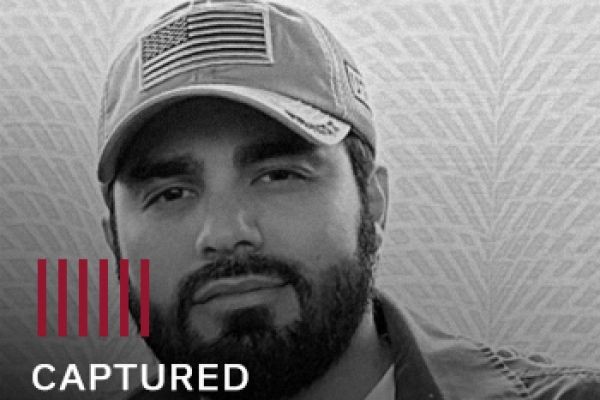
Dámaso López Serrano was born on November 23, 1987, in Culiacán, Sinaloa—into power, privilege, and inevitability. Known as “El Mini Lic,” a diminutive that tethered him to his father, Dámaso López Núñez, he rose as the archetypal narcojunior of the Sinaloa Cartel. Groomed inside the system, he would go on to command Los Ántrax, the cartel’s most ostentatious and feared enforcement arm, a unit that fused spectacle with brutality.
His trajectory reads less like a rise than a loop: heir to cartel royalty, feared enforcer, U.S. cooperator, briefly free man, then defendant once again—this time facing fentanyl trafficking charges. In cartel mythology, loyalty is currency and betrayal is unforgivable. Both father and son crossed that line, earning the ultimate scarlet letter in organized crime: rata. Their cooperation with U.S. authorities detonated internal wars, accelerated bloody score-settling, and exposed a deeper truth about the post–El Chapo era—an empire no longer held together by fear alone, but fractured by mistrust from within.
Family Ties: “El Licenciado,” Puente Grande, and the Making of a Cartel Heir
Dámaso López Núñez—better known as “El Licenciado”—did not begin as a trafficker, but as a state functionary. As a senior official at the Puente Grande prison in Jalisco, he occupied a position of trust that would become a gateway to infamy. There, he forged a relationship with Joaquín “El Chapo” Guzmán and ultimately played a decisive role in Guzmán’s audacious 2001 escape, smuggled out in a laundry cart.
After the breakout, López Núñez crossed fully into the underworld. He joined the Sinaloa Cartel and rose rapidly, becoming one of El Chapo’s closest lieutenants and a central architect of the organization’s trafficking corridors across Mexico, the United States, and into Central and South America. The alliance was not merely operational—it was familial. López Núñez became compadre to El Chapo, serving as godfather to Guzmán’s twin daughters, while El Chapo, in turn, became godfather to Dámaso López Serrano. From childhood, “El Mini Lic” was positioned not at the margins of the cartel, but at its inner sanctum.
That intimacy would later fuel one of the cartel’s most consequential betrayals. In 2019, López Núñez took the stand in a Brooklyn federal courtroom, testifying against El Chapo in meticulous detail. He described murders, torture sessions, bribery networks, and prison escapes, including the role of El Chapo’s wife, Emma Coronel, in coordinating the infamous 2015 tunnel escape. His cooperation spared him a life sentence—but in cartel culture, it sealed his fate. The label rata followed him and, by extension, his son, igniting vendettas that would reverberate through the organization.
Los Ántrax: Youth, Violence, and the Performance of Power
Within that world, Dámaso López Serrano carved out his own reputation. As leader of Los Ántrax, a youthful and highly visible enforcement cell based in Culiacán, Mini Lic embodied a new cartel aesthetic—one that fused lethal violence with social media bravado, luxury vehicles, designer clothes, and public displays of impunity. Originally aligned with Ismael “El Mayo” Zambada, Los Ántrax functioned as both a security detail and a hit squad, tasked with eliminating rivals and projecting dominance.
The group was implicated in some of the bloodiest episodes of the cartel wars, including the 2010 Tubutama shootout in Sonora, where roughly 30 people were killed in a clash involving factions linked to the Beltrán Leyva Organization and Los Zetas. Its ranks included notorious figures such as José Rodrigo Aréchiga Gamboa, “El Chino Ántrax,” arrested in 2013 and later killed in 2020, as well as operatives known as “El Quinceañero” and “El Pantera,” the latter gunned down in 2014.
Operating primarily in Sinaloa and Baja California Sur, Mini Lic expanded his network and influence, but his rise unfolded against a cartel already fraying from internal mistrust. In the end, his story—like his father’s—would come to symbolize a deeper rupture: a criminal empire weakened not only by law enforcement pressure, but by betrayal from within.
2016–2017: Civil War Inside the Sinaloa Cartel
El Chapo’s recapture in January 2016 left a vacuum—and Dámaso López Núñez moved to fill it. His bid for control put the Dámasos on a collision course with Los Chapitos—Iván Archivaldo, Jesús Alfredo, Ovidio, and Joaquín Guzmán López—triggering one of the most violent internal wars in the cartel’s history.
By February 2017, Culiacán had become a battlefield. Gunfights erupted in broad daylight, kidnappings multiplied, and dozens were killed, many of them civilians caught between rival factions. The Dámasos allegedly sanctioned attacks against both Los Chapitos and Ismael “El Mayo” Zambada, a move that unified their enemies. The counteroffensive was swift and decisive: properties were torched, allies flipped, and the Dámasos’ power base collapsed. López Núñez was arrested in May 2017. Two months later, his son crossed the border and surrendered to U.S. authorities at Calexico—at the time, the highest-ranking Sinaloa figure ever to voluntarily give himself up.
The war claimed hundreds of lives, permanently weakened the cartel’s internal cohesion, and coincided with a strategic shift toward fentanyl—cheaper, deadlier, and easier to move than cocaine or heroin.
Cooperation and the Permanent Stain of Betrayal
Both father and son chose survival over silence. López Núñez was extradited in 2018 and became a star witness at El Chapo’s 2019 Brooklyn trial, detailing executions, bribery schemes, and escape plots. His testimony helped secure one of the most consequential convictions in modern drug war history and shaved decades off his sentence. He was quietly released years later, a free man in legal terms—but permanently marked in cartel lore.
Mini Lic followed the same path. In 2018, he pleaded guilty to trafficking and money laundering charges and cooperated extensively, providing intelligence on routes, internal disputes, and Los Chapitos’ operations. His sentence was reduced to roughly five years. He walked out of prison in 2022 under supervised release.
In cartel culture, cooperation is not a legal strategy—it is an unforgivable sin. The rata label attached to both men hardened vendettas and reshaped alliances, fueling retaliatory violence that outlived their testimony.
Citizenship, Custody, and Unfinished Accounts
Despite years in U.S. custody, Dámaso López Serrano is not an American citizen. Born in Culiacán, he entered the U.S. justice system as a foreign national and remained under strict supervision after his release. Mexican authorities have long sought his extradition in connection with unresolved crimes, but U.S. prosecutors retained him as a cooperating witness.
The Javier Valdez Case: A Shadow That Never Lifted
One accusation has followed Mini Lic more closely than any other: the 2017 assassination of Javier Valdez, the Pulitzer Prize–winning journalist and co-founder of Río Doce. Mexican prosecutors allege López Serrano ordered the killing, enraged by Valdez’s reporting during the Sinaloa civil war. The gunmen have been convicted. Mexico identifies Mini Lic as the intellectual author.
He has repeatedly denied involvement, blaming Los Chapitos—a claim echoed by his father during El Chapo’s trial. The case remains a moral fault line: a test of whether cooperation can indefinitely shield a man accused of silencing a journalist whose only weapon was truth.
Freedom, Relapse, and the Fentanyl Era
In December 2024, the illusion of a clean break collapsed. Federal agents arrested Mini Lic at his Virginia home following an FBI sting that alleged he had returned to trafficking—this time fentanyl—between September and December 2024. Informants, intercepted communications, and controlled deals tied him once again to Sinaloa supply chains.
In May 2025, he pleaded guilty in federal court to conspiracy to distribute more than 400 grams of fentanyl. Sentencing is pending. Reports suggest yet another cooperation agreement may be in play.
The arc is grimly familiar: deal, release, relapse.
Final Assessment: What the Dámasos Represent
The story of Dámaso López Serrano is not merely about betrayal—it is about transformation. His life charts the evolution of the Sinaloa Cartel itself: from hierarchical loyalty under El Chapo to a fractured network dominated by fentanyl, informants, and perpetual internal war.
As of late 2025, Mini Lic sits in federal detention once more, awaiting sentence, his value measured again in what he can give up. Godson to a kingpin. Son of a cooperator. Enforcer turned witness turned defendant.
In the modern narco-state, loyalty no longer guarantees survival, cooperation no longer guarantees freedom, and the line between power and captivity grows thinner with every deal.